

If you are a facility manager, commercial architect, or corporate office manager, you already know that adding greenery to your building is no longer optional. The data is indisputable: biophilic design attracts high-paying tenants, drastically improves employee productivity, and transforms cold, sterile lobbies into warm, welcoming environments.
But once you decide to “go green,” you immediately face the most highly debated question in commercial interior design: Do we install real, living plants, or do we use high-quality artificial (faux/silk) plants?
It is a massive decision. Choose the wrong option for your specific building, and you could end up with thousands of dollars in dead foliage, water damage, or a lobby that looks cheap and outdated.
At Biozenic, we design, install, and maintain both spectacular living vertical gardens and ultra-realistic silk botanical displays across Southern California. We do not play favorites; we play matchmaker. In this comprehensive guide, we are going to tear down the myths surrounding both options, compare the true long-term ROI, and give you the exact framework to decide whether living walls or faux plants are the right investment for your commercial real estate.
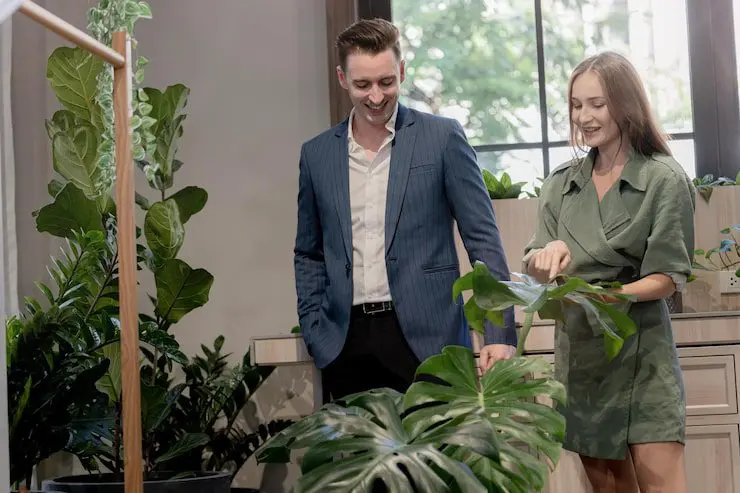
The Case for Living Walls (Vertical Gardens
Living walls—also known as vertical gardens—are the undisputed crown jewels of biophilic design. These are complex, living, breathing ecosystems installed vertically on the interior or exterior walls of a building. They are striking, monumental, and impossible to ignore.
For companies looking to make a massive statement about their commitment to sustainability and employee wellness, vertical gardens in Southern California are the gold standard.
The Undeniable Benefits of Living Walls
1. Active Air Purification (Phytoremediation) This is the single biggest advantage living walls hold over faux plants. Living walls act as massive, natural HVAC filters. The roots and foliage actively pull harmful Volatile Organic Compounds (VOCs)—like formaldehyde, benzene, and trichloroethylene—out of the stagnant office air, metabolize them, and release fresh, clean oxygen. For buildings suffering from “Sick Building Syndrome,” a living wall is a functional, air-purifying powerhouse.
2. The True Biophilic Psychological Response Human beings are wired to respond to living nature. While high-quality faux plants can trick the eye, the subtle, organic movements of a living plant—the way it grows, the natural scent of the soil and foliage, the slight changes in color—trigger a deeper parasympathetic nervous system response. Living plants have been clinically proven to lower heart rates and reduce cortisol levels in office workers in a way that static, artificial plants cannot fully replicate.
3. LEED Certification and Green Building Points If you are an architect or property manager aiming for LEED (Leadership in Energy and Environmental Design) or WELL Building Standard certification, living walls provide tangible points. They contribute to indoor environmental quality, thermal comfort, and sustainable design metrics.
The Logistical Requirements of Living Walls
Living walls are breathtaking, but they are living organisms that require life support. You cannot simply hang one up and walk away.
- Plumbing and Irrigation Needs: Most large-scale living walls require direct plumbing integration. They need a water supply line, a drainage system, and an automated irrigation controller to ensure the plants receive precise hydration.
- Specialized Lighting: Plants need to eat, and they eat light. If your lobby does not have massive skylights or south-facing windows, you will need to install specialized LED grow lights mapped directly to the wall’s surface to prevent the plants from dying.
- Ongoing Maintenance Budgets: You must budget for professional monthly indoor plantscaping maintenance. This includes pruning, fertilizing, organic pest control, and occasionally replacing plants that naturally age out.
The Case for High-Quality Faux & Silk Plants
Let’s address the elephant in the room: when many people hear “artificial plants,” they picture the dusty, shiny, plastic-looking ivy from a 1990s doctor’s office.
Erase that image from your mind.
The technology behind commercial botanical replicas has evolved exponentially. Today’s luxury faux plants are crafted from high-grade silks, commercial-grade polymers, and even feature real, ethically sourced natural wood trunks. They are hand-painted, UV-treated, and hyper-realistic. Unless you physically touch the leaves (and sometimes even then), you cannot tell they are artificial.
For many modern businesses, faux and silk plantscaping is the smartest, most cost-effective choice.
The Undeniable Benefits of Faux Plants
1. Absolute Zero Maintenance This is the ultimate selling point for facility managers. Silk plants require zero water, zero fertilizer, and zero pest control. You do not need to worry about irrigation leaks destroying your drywall, and you do not need to pay a monthly retainer for a horticulturalist to come and prune them. A light dusting with a microfiber cloth or a blast of compressed air every few months is the entire maintenance routine.
2. Perfect for “Impossible” Environments Living plants are picky. If you want a lush, jungle aesthetic in a windowless basement conference room, a dark casino floor, or a heavily air-conditioned server room, living plants will simply die. Faux plants thrive in pitch-black rooms, freezing temperatures, and scorching heat.
3. Unmatched Design Flexibility Because they weigh significantly less than soil-filled planters and require no water lines, faux plants can be installed anywhere. Want a massive, cascading canopy of greenery hanging directly over a multi-million-dollar computer server or a luxury dining table? Faux is the only safe option, as there is zero risk of water dripping or soil falling.
The Drawbacks of Faux Plants
- No Air Quality Benefits: Artificial plants do not filter the air or produce oxygen. They are purely aesthetic.
- The “Dust Trap” Stigma: While maintenance is virtually zero, they must be dusted regularly. A dirty silk plant instantly shatters the illusion of nature and looks neglected.
- Fade Risk (If Not Treated): If placed in direct, blazing Southern California sunlight, lower-quality artificial plants can fade over time. At Biozenic, we only use premium, UV-protected materials for any areas exposed
to intense natural light.

Using Plants for Functional Space Division
Beyond just wall art, both living and faux plants are frequently used as architectural tools to manage foot traffic and divide large spaces.
In the era of open-concept offices, sound travels easily, and employees often complain about a lack of privacy. Instead of building expensive, permanent drywall or installing harsh glass partitions, clever architects use green screens.
Green screens are movable, freestanding planter boxes featuring tall, dense foliage (either living tall grasses/bamboos or high-end faux equivalents). They act as natural room dividers that absorb sound, block sightlines, and create cozy, private workstations or dining areas without blocking the flow of ambient light.
- When to use living green screens: In well-lit, open-plan offices where the planters can be easily accessed by maintenance crews for watering.
- When to use faux green screens: In high-traffic, low-light hospitality environments (like dividing tables in a busy restaurant) where you cannot risk spilled water or guests damaging delicate living leaves.
The Hybrid Approach: The Ultimate Design Secret
Here is a closely guarded secret in the commercial design industry: You do not have to choose just one.
The most stunning, budget-friendly, and sustainable commercial spaces utilize a strategic “Hybrid Approach,” seamlessly blending living greenery with high-end artificial botanicals. When done correctly by a professional agency like Biozenic, the human eye assumes everything is real.
How to Execute the Hybrid Strategy:
- The “Touch Zone” Rule: Place real, living plants in areas where people will get up close and personal. Use living potted plants on employee desks, reception counters, and eye-level living walls in the main lobby. Because humans can smell the soil and touch the leaves in these zones, the authenticity matters.
- The “Out of Reach” Rule: Use high-quality faux plants in areas that are difficult to access or lack light. If you want greenery trailing from a 30-foot ceiling, high up on a mezzanine, or in dark, windowless elevator banks, use premium silk plants. The viewer is too far away to tell the difference, and you save thousands of dollars on complex scaffolding maintenance and specialized grow lights.

Breaking Down the Costs and ROI
When presenting to your CFO, the decision will ultimately come down to numbers. Let’s look at the financial lifecycle of both options.
The Financial Lifecycle of a Living Wall
- Upfront Costs: High. You are paying for the plants, the structural grid, the waterproof backing, the irrigation system, the plumbing labor, and potentially specialized LED lighting arrays.
- Ongoing Costs: Moderate to High. You must pay a monthly retainer for a professional plantscaping company to maintain the wall, plus the cost of water and electricity for the grow lights.
- The ROI: You recoup this investment indirectly. You gain LEED points (which can offer tax benefits), you increase property value, you lower HVAC costs through natural temperature regulation, and you significantly boost employee productivity and retention through improved mental health and air quality.
The Financial Lifecycle of a Faux Plant Installation
- Upfront Costs: Moderate. High-quality, commercial-grade silk botanicals are not cheap; they are premium architectural materials. However, because you do not need plumbing, waterproofing, or lighting, the installation labor is drastically cheaper.
- Ongoing Costs: Zero. Aside from standard janitorial dusting, there is no monthly maintenance contract, no water bill, and no replacement costs for dead plants.
- The ROI: You get the immediate, profound visual impact of biophilic design and space transformation, allowing you to charge higher rents or attract premium hospitality guests, all without the anchor of a recurring monthly operating expense.
The Biozenic Decision Checklist
Still on the fence? Use this quick checklist. We recommend Living Walls if you answer “Yes” to the following:
- You have access to a dedicated water line and drainage in the installation area.
- The area receives bright, natural light, or you have the budget to install architectural grow lights.
- You want to actively improve the indoor air quality and remove VOCs.
- You have an approved monthly operational budget for professional horticultural maintenance.
We recommend High-Quality Faux Plants if you answer “Yes” to the following:
- The installation area is incredibly dark, such as a basement, nightclub, or interior hallway.
- The greenery will be placed in hard-to-reach areas (high ceilings, suspended beams) that make watering dangerous or impossible.
- You want the visual “wow factor” of nature but have strictly zero budget for ongoing monthly maintenance.
- The installation area undergoes extreme temperature fluctuations (e.g., near freezing entryways or hot server rooms).
Conclusion: Making the Right Choice for Your Space
There is no “wrong” choice when it comes to bringing the aesthetic of nature into your commercial environment—there is only the right choice for your specific logistical constraints and budget.
Whether you want the air-purifying prestige of a sprawling, living vertical garden, the indestructible, zero-maintenance luxury of premium silk botanicals, or a clever hybrid of both, the key is execution. High-end biophilic design requires expertise to ensure your investment looks stunning on day one, and day one thousand.
Stop guessing what will work in your space and let the experts design it for you. Contact the Biozenic team today for a comprehensive space audit. We will evaluate your lighting, your budget, and your brand to deliver a custom green solution that elevates your business.
Real or Faux? Let the Experts Decide.
Don’t risk your budget on the wrong botanicals. Schedule a free space audit with Biozenic. We’ll assess your lighting, plumbing, and design goals to recommend the perfect living or silk plantscaping solution for your commercial property.
Request a Free Space Audit