
The ROI of Greenery
The commercial real estate (CRE) sector is in the midst of a historic transformation. Following the massive shifts in how and where people work over the last few years, the market has clearly spoken: the era of the sterile, “white box” office space is officially over.
Today, commercial landlords, property managers, and real estate developers are facing a hyper-competitive landscape. The “flight to quality” is real. Tenants are abandoning outdated, uninspiring Class B and C buildings in favor of Class A spaces that actively promote employee wellness, productivity, and sustainability.
To compete in 2026, building owners must offer more than just square footage and high-speed internet. They must offer an experience.
This is where the financial power of biophilic design comes into play. Integrating nature into the built environment is no longer viewed as a soft, aesthetic perk handled at the end of a build. It is a calculated, strategic capital improvement.
In this comprehensive guide, we are going to look past the psychological benefits of plants and dive directly into the economics. We will explore exactly how biophilic design increases commercial property value, the metrics behind tenant retention, the impact on your Net Operating Income (NOI), and the specific green upgrades that yield the highest return on investment.
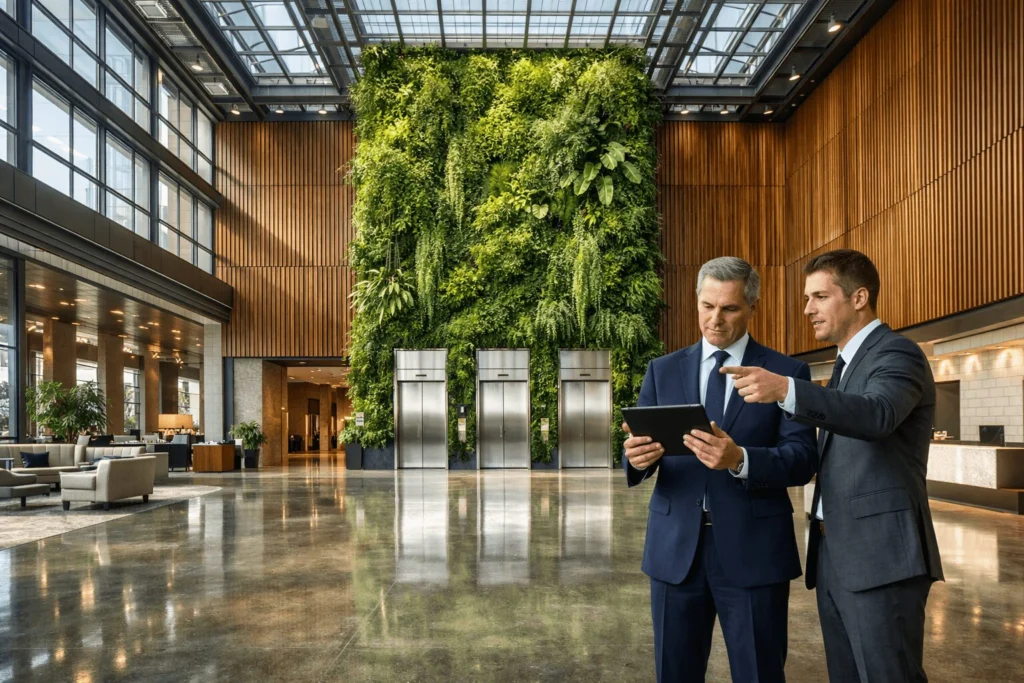
The “Flight to Quality” in Commercial Real Estate
To understand the ROI of greenery, you must first understand the current mindset of the corporate tenant.
Companies are currently fighting a two-front war: the battle to retain top-tier talent and the battle to convince employees to commute to a physical office. When a corporate CEO or HR Director tours your commercial property, they are asking themselves one simple question: “Is this space better than my employees’ home offices?”
If your building features harsh fluorescent lighting, synthetic gray carpets, and zero connection to the outside world, the answer is a resounding no.
Premium tenants are actively seeking out buildings that feature natural light, organic materials, and lush indoor plantscaping. These biophilic elements are scientifically proven to lower cortisol (stress) levels, increase cognitive function, and improve air quality. When a building offers these health benefits baked into the architecture, it ceases to be a commodity and becomes a premium asset.
The Direct Financial ROI of Biophilic Design
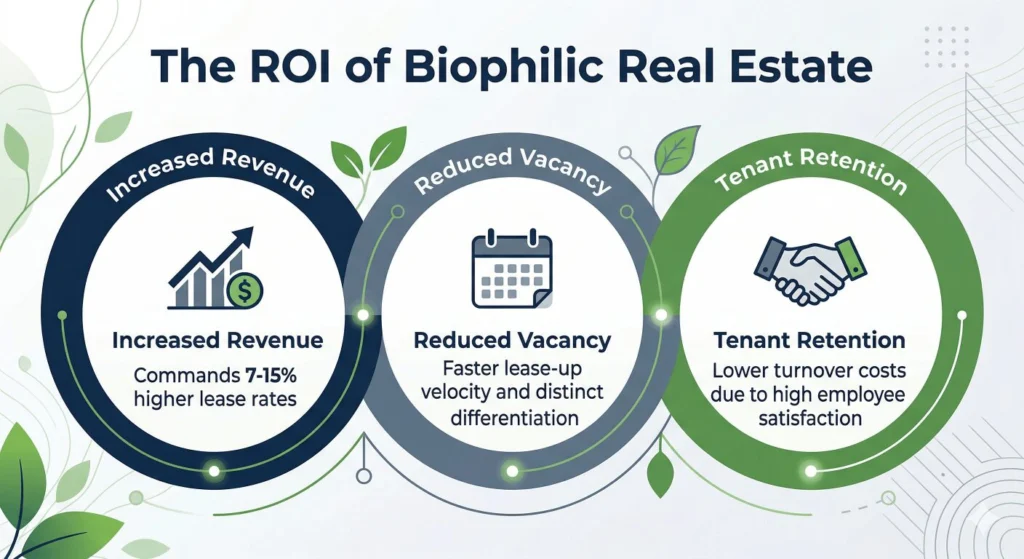
How does a lobby full of plants translate into higher property valuation? In commercial real estate, property value is intrinsically linked to Net Operating Income (NOI). If you can increase revenue (higher rents, lower vacancy) and decrease operating costs, your NOI goes up. When your NOI goes up, your building’s cap rate valuation skyrockets.
Here are the three primary ways biophilic design directly impacts your NOI:
1. Commanding Premium Lease Rates
Tenants are willing to pay a premium for spaces that help them solve their HR problems. According to studies published in the Journal of Real Estate Research, commercial spaces featuring high-end biophilic design, ample natural light, and green amenities command lease rates that are 7% to 15% higher than comparable buildings in the same submarket without these features.
When you install a breathtaking living wall in your main lobby, you set an immediate anchor of luxury. Prospective tenants mentally categorize the building as a premium, wellness-focused environment before they even step foot in the actual suite, allowing leasing agents to confidently quote higher price per square foot metrics.
2. Faster Lease-Up Velocity (Decreasing Vacancy Days)
Every day a commercial suite sits empty, it drains your NOI. In a competitive market, differentiation is everything. When a prospective tenant tours five different buildings in one day, four of them will blur together in a haze of white drywall and drop ceilings. The fifth building, the one with the stunning preserved moss art installation, the cascading lobby vines, and the lush, plant-filled common areas, is the one they will remember.
Brokers consistently report that buildings with strong biophilic identities experience significantly shorter marketing periods and faster lease-up velocities.
3. Skyrocketing Tenant Retention
Acquiring a new tenant is incredibly expensive. Between broker commissions, tenant improvement (TI) allowances, and lost rent during the vacancy period, tenant turnover is the enemy of commercial profitability.
Biophilic design creates “sticky” tenants. When employees love the building they work in, because the air is cleaner, the acoustics are softened by greenery, and the environment feels alive, they pressure management to stay. A building that actively supports tenant wellness experiences drastically lower turnover rates, stabilizing your cash flow for years.
Securing Green Building Certifications (LEED & WELL)
For institutional investors and major developers, securing sustainability certifications is no longer a PR stunt; it is a financial necessity. Many Fortune 500 companies have strict ESG (Environmental, Social, and Governance) mandates that legally prohibit them from leasing space in buildings that are not LEED or WELL certified.
If your building does not meet these standards, you are automatically locked out of the most lucrative tenant pool in the world.
How Plantscaping Helps:
- LEED (Leadership in Energy and Environmental Design): Strategic biophilic design can help developers earn LEED points in several categories, including Indoor Environmental Quality (IEQ), Innovation in Design, and Water Efficiency (when using smart, recirculating irrigation for living walls).
- WELL Building Standard: The WELL standard is explicitly focused on human health and wellness. It features an entire section dedicated to “Mind” and “Innovation,” which heavily mandates the inclusion of nature, spatial familiarity, and biophilic design patterns.
By investing in custom biophilic architecture, developers fast-track their ability to secure these vital certifications, thereby increasing the marketability and ultimate resale value of the asset.
High-ROI Biophilic Upgrades for Commercial Properties
Not all greenery is created equal. Tossing a few cheap plastic ferns into a corner will not increase your property value. To move the financial needle, the design must be intentional, architectural, and premium.
Here are the top biophilic upgrades that yield the highest ROI for property managers:
1. Monumental Vertical Gardens (Living Walls)
There is no feature more impactful than a living vertical garden. Installed in main lobbies, exterior courtyards, or massive multi-story atriums, living walls act as the beating heart of a building. They actively filter VOCs out of the air, naturally cool the surrounding area through transpiration (lowering HVAC costs), and provide a jaw-dropping visual focal point that screams “Class A Luxury.”
2. High-End Faux & Silk Plantscaping
If your commercial property features notoriously difficult environments, such as windowless basement concourses, dark parking garage elevator banks, or sky-high vaulted ceilings where maintenance crews cannot safely reach, living plants are a liability.
This is where premium faux and silk plantscaping shines. Using hyper-realistic, commercial-grade silk botanicals allows developers to inject the psychological benefits of nature into “dead zones” without incurring a single dollar of ongoing maintenance, plumbing, or lighting costs.
3. Preserved Moss Wall Art
For corporate hallways, executive boardrooms, and reception desks, preserved moss walls offer the ultimate blend of high design and zero maintenance. Made from 100% real moss that has been eco-preserved, these installations require no water or sunlight, yet they provide incredible acoustic dampening for echoing commercial spaces. They can even be customized to feature building logos or directional wayfinding.
4. Amenity Deck & Rooftop Plantscaping
If your building has an outdoor terrace or rooftop, it is vastly underutilized if it is just concrete and glass. Transforming these areas into lush, biophilic retreats with mature trees, shaded green screens, and wind-blocking planters turns dead space into a highly monetizable tenant amenity.
CapEx vs. OpEx: Financing Your Greenery
One of the main reasons property managers hesitate to overhaul their building’s interior landscaping is the fear of upfront capital expenditures (CapEx). While custom architectural builds (like installing the plumbing for a massive living wall) are capital improvements, populating your building with premium greenery doesn’t have to drain your cash reserves.
The Power of the Plant Leasing Program
At Biozenic, we understand commercial budgeting. That is why we offer a highly flexible plant leasing program.
Instead of dropping tens of thousands of dollars to purchase commercial-grade planters and exotic foliage outright, property managers can shift biophilic design from a CapEx to an Operating Expense (OpEx).
How it works: Biozenic retains ownership of the luxury planters and the plants. The building management pays a single, predictable monthly fee that covers the rental of the botanicals and the comprehensive professional maintenance (watering, pruning, pest control, and free replacements if a plant fails).
The Financial Benefit: This keeps your capital free for other structural building improvements while allowing you to instantly upgrade the aesthetic of your property. Furthermore, leasing allows you to completely redesign and refresh the building’s greenery every few years to keep the property looking modern and competitive, all without having to liquidate outdated planters.
Elevating the Tenant Experience
Ultimately, commercial property value is driven by human demand. A building is just a shell of steel and glass until people inhabit it.
When you integrate biophilic design, you are signaling to the market that you understand the future of work. You are providing a sanctuary that actively combats burnout, fosters creativity, and prioritizes human health.
When a prospective tenant walks into your building, they should instantly feel their shoulders drop and their stress melt away. They should look at the lush greenery, take a deep breath of purified air, and think: “This is exactly where my company needs to be.”
When you achieve that emotional reaction, the lease rates take care of themselves. You can view examples of how we have transformed commercial properties across Southern California in our project gallery.
Conclusion: Invest in Growth
Increasing commercial property value in 2026 requires more than a fresh coat of paint and upgraded carpets. To attract premium tenants, secure green building certifications, and maximize your Net Operating Income, you must invest in the architecture of wellness.
Biophilic design is the ultimate real estate differentiator. It is a proven, measurable strategy to separate your asset from the competition, justify higher rents, and create a building that companies fight to lease.
Are you ready to elevate your commercial property and maximize your ROI?
Contact the experts at Biozenic today to schedule a comprehensive commercial space audit. Our team of biophilic designers and horticulturists will partner with your property management team to design a strategic, budget-friendly green solution that drives real financial results.