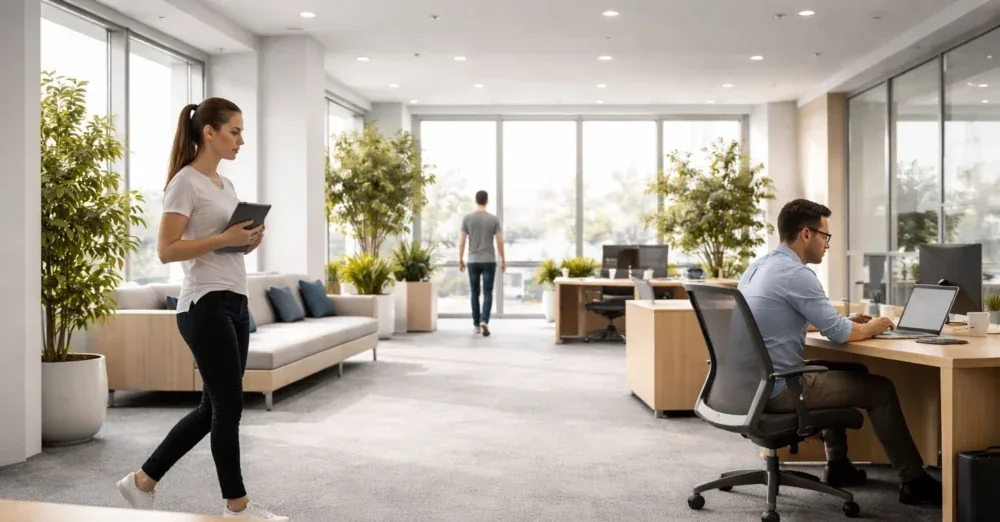
Before productivity, there is energy.
And yet, in many workplaces, energy is treated as something people are expected to manage on their own. Coffee, breaks, and personal routines are seen as the go-to solution. But there is another factor that is far more constant — and far more overlooked.
The environment itself.
The Hidden Variable: Energy Depletion
Not all fatigue comes from workload.
A significant portion of it comes from the space people occupy throughout the day. Environments that lack physical support quietly create strain — and most people never connect the dots between how they feel and where they are.
Poor air circulation can lead to sluggishness. Limited access to natural light can disrupt energy rhythms. Dense or constrained layouts can affect how the body moves and resets between tasks.
These effects are not always immediately noticeable. But over time, they accumulate.
People shift more in their seats. They lose focus faster. They feel tired earlier than expected — not because the work is harder, but because the space is working against them.
This is energy depletion by design. And it is more common than most organizations realize.
If you are thinking about the physical foundation of your workspace, our guide on ergonomic workplace solutions explores the principles behind spaces that support rather than strain.

Energy Support as a Design Outcome
Well-considered environments do not demand more from people. They support them.
Spaces calibrated for physical wellness allow the body to move naturally without resistance. They provide a sense of openness that reduces physical tension. They maintain environmental comfort — temperature, light, air — in ways that support sustained presence rather than constant adaptation.
In these environments, energy is not constantly being spent on adjusting. It is preserved.
This is not a vague idea. It is a measurable shift in how people experience the workday — one that begins with understanding how workplace ergonomics and physical well-being are directly connected.
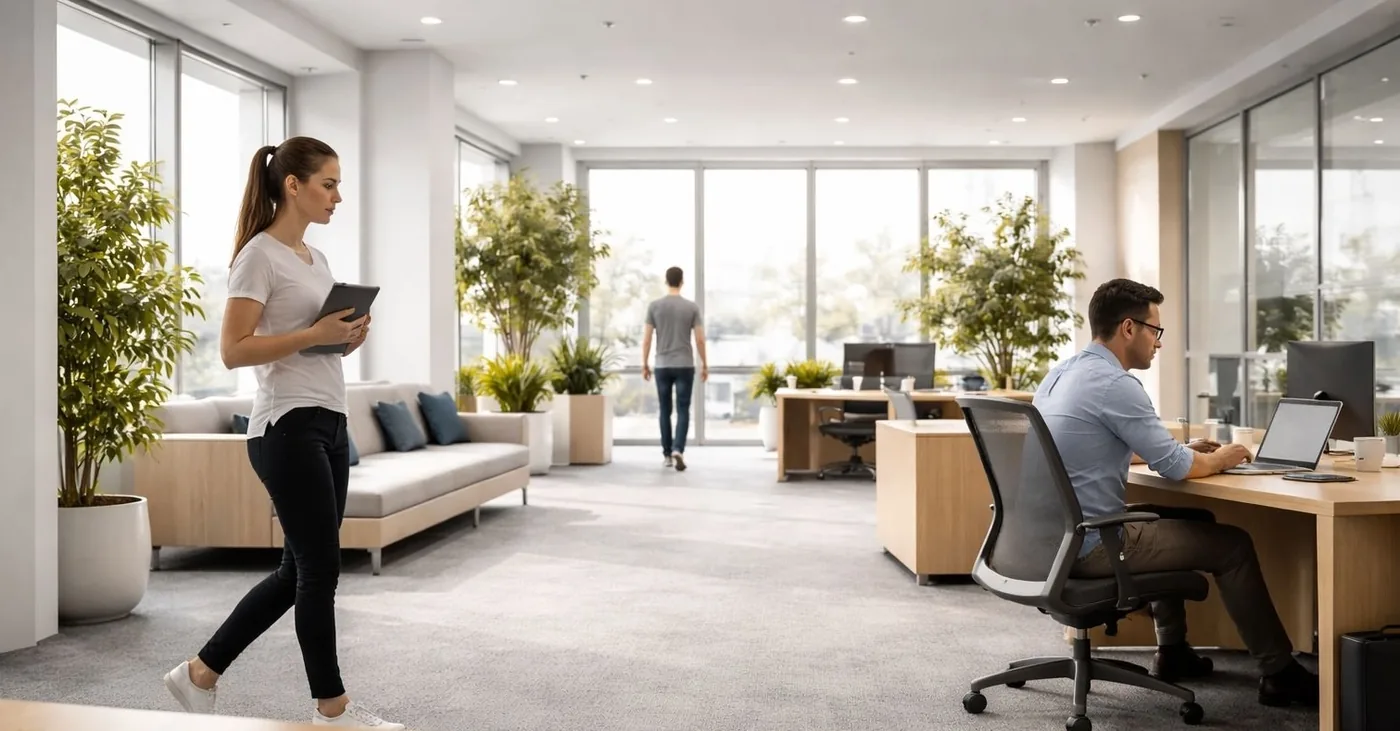
Why This Matters More Than We Think
When physical energy is genuinely supported by the environment, the effects ripple outward.
People sustain attention longer. Transitions between tasks feel less taxing. Daily work feels more manageable — not because the workload decreased, but because the space stopped adding invisible friction to every hour.
This is not about pushing people to work harder. It is about removing unnecessary strain so they can maintain a steady level of output without fatigue setting in prematurely.
The difference between a draining space and a supportive one is not always dramatic. It is often quiet. But its impact on performance, morale, and longevity at work is anything but small.

Rethinking Workplace Strategy
For many organizations, performance conversations focus on efficiency, workflows, and systems. These matter. But without addressing physical energy, even the best-designed processes fall short.
Because no matter how well a workflow is structured, it still depends on the person executing it. And that person is constantly, continuously responding to their environment — whether they are aware of it or not.
Organizations that understand this shift their approach. Instead of layering productivity tools onto a draining space, they start by asking a more fundamental question.
Explore how biophilic and human-centered workspace design can serve as the foundation for that shift.
A Shift in Perspective
Instead of asking: How can people do more?
A better question is: What is the environment asking from them throughout the day?
Is it requiring constant adjustment — physical, sensory, postural? Or is it quietly supporting them, hour after hour, so that their energy goes into the work rather than into simply coping with the space?
That reframe changes everything about how workplaces are designed, evaluated, and invested in.
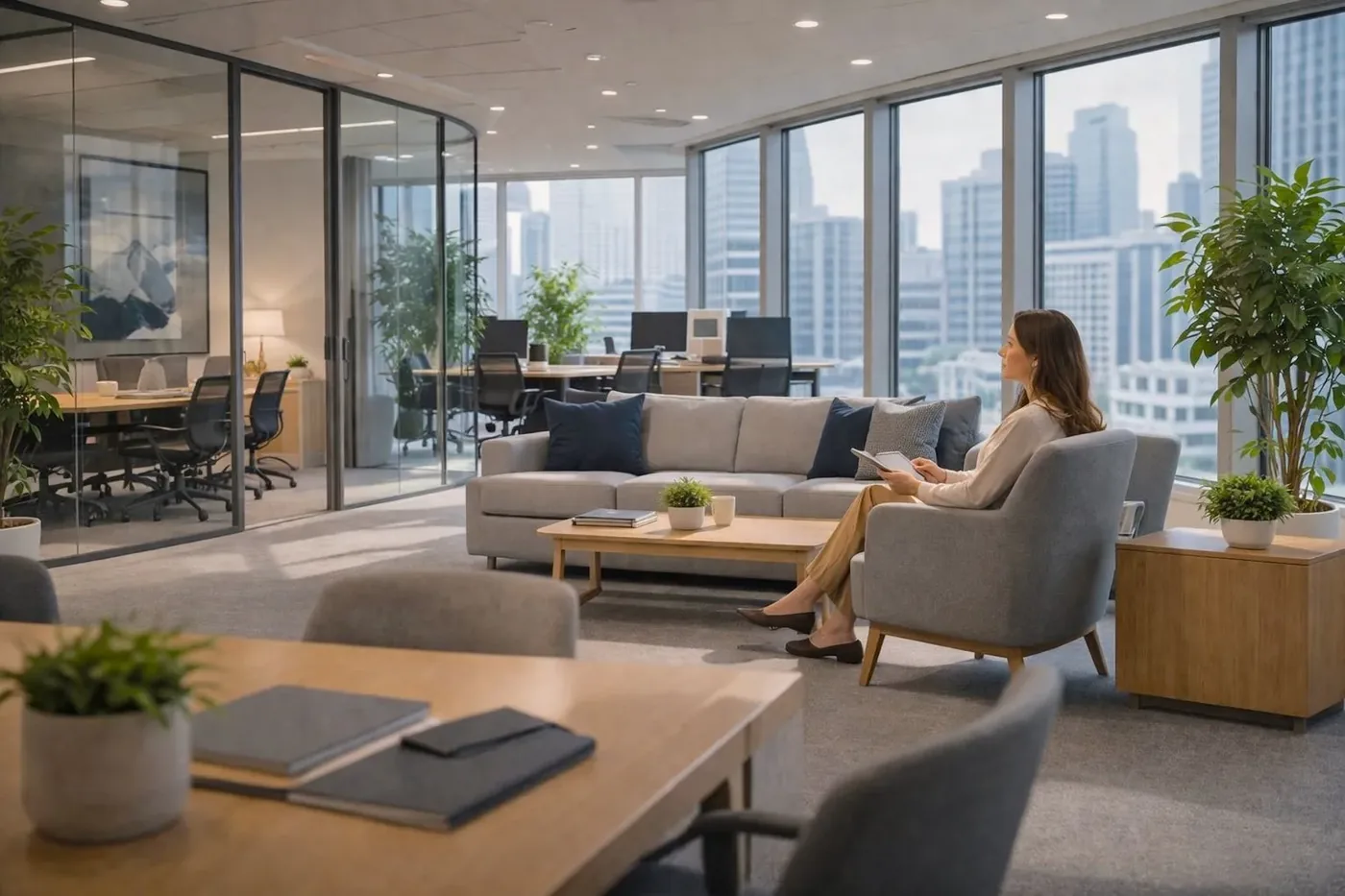
The Bottom Line
Before productivity, there is energy.
The question is not how hard people work — it is whether the environment is quietly draining or actively supporting them throughout the day.
When a space supports the body, everything else becomes easier to sustain. Focus, output, engagement, and well-being are not just personal attributes. They are, in large part, design outcomes.
At Biozenic, we build around this understanding — because the spaces people occupy shape the people they get to be inside them.